Early bird scholarship up to 30%
⚠ Alert: Offer available till 31st of July 2026
Features of Power MBA 4.0

2hrs-4hrs Storytelling
The meetings come in the form of Roundtable discussions with the speakers and our executive students through telling their entrepreneurial journeys and sharing real-life experiences.

International Business Meetings
Our students have the opportunity to attend international Business meetings, and study tours during their program with DGBS, organized in various countries where we have partnerships.

Flexible Payment
Learning must not be very difficult and expensive to get. If we have to change the world with responsible global business leaders, learning should be flexible, affordable, and touch the realities of life and prosperity.

Access to Videos And Materials
students will have access to all lecture videos, materials, and more resources to support their learning experience after every session.

Double Certificate
Our students will be issued two certificates at the end of their program. One certificate from International Skill Development Corporation with Accreditation from Scottish Qualification Authority and another from our partnering University.

Global & African Studies
Case studies are based on realities in the African Business environment with a comparison to the global trends in the international business arena.
Get to know more about Powerr MBA 4.0
Program Details
Power MBA with ISDC Scottish Qualifications Authority
The Power MBA 4.0 is an elite, fast-track Executive Master’s program designed for the modern
professional who doesn’t have two years to step away from the workforce. This is a dual-
qualification program that combines the academic prestige of a Master’s degree with the
practical, “street-smart” business skills required to lead in today’s volatile market.
It is specifically built for those who want to earn a world-class degree while serving in their
professional career in Nigeria, leveraging online flexibility to gain global business insights without the cost or disruption of relocating.
Key Academic Facts
- Credits Weight: 120 CATS (Credit Accumulation and Transfer Scheme
- Academic Level: Scottish Credit and Qualifications Framework Level 11 PostgraduateQualification.
- Duration: 12 Months (Fast-Track).
- Structure: Blended Learning (Live Virtual Classes + Self-Paced Modules).
- Accreditation: Dual Certification from Bodhisastra University (USA) and ISDC UK (ScottishQualification Authority and WES evaluated).
- Tuition: 4,000,000.00
- Why Choose Us ?
- Benefits
- Learning Outcomes
- Engaging Program Content
- Learning Support
- Program Structure
- Program Awarding Institutions and Title
- Program Completion
- Career Pathways
- Faculty
- Sample Certificate
- Dual Global Credential: Graduate with two distinct certifications from the US and UK, giving your CV immediate international authority.
- Zero Career Interruption: Designed for busy managers. You apply what you learn on Saturday to your business on Monday morning.
- The “Power” Network: Gain access to an exclusive community of business leaders and entrepreneurs across Africa and the Middle East.
- Premium Value, Local Price: Access the same curriculum taught in top-tier global b-schools at a fraction of the cost, with no foreign exchange or travel overhead.
- Student Support: We are committed to providing robust student support services, including academic advising and career services, to help professionals excel in their MBA studies in Lagos, Nigeria and globally.
Benefits:
- For Experienced Executives of 25 years of age and above (+5 years of work experience).
- International Immersion and Global Business Matching in Portugal, Spain, Thailand, Kigali, China, and Canada.
- All Programs are Implementation-Based
- Team Teaching based
- AI literacy for all graduates of the Power MBA 4.0
- Focuses on the trends and business management technologies of the Industry 4.0
- 2 hours storytelling
- Flexible payment
- Access to Videos and Materials from Docenti LMS
- Global and real-life scenario cases
- Excellent Reviews from Graduates
- Prestigious Degree
- Dedicated supervisors
- Internship and career services
- Access to DG-BOU international alumni network
- Business mentoring
- Get ready to become a global Business leader
Core Business Knowledge
- Understand key areas of business:
- Marketing
- Finance
- Operations
- Strategy
- Ability to see how different departments work together
Strategic Thinking
- Analyze business problems and propose practical solutions
- Make data-driven decisions
- Understand competitive positioning and market dynamics
Entrepreneurship & Innovation
- Learn how to build and scale startups
- Develop business models (e.g., Lean Canvas, MVP approach)
- Identify opportunities in digital and global markets
Digital & Modern Business Skills
- Understand digital marketing (SEO, ads, social media)
- Learn e-commerce and online business models
- Exposure to real-world case studies (Netflix, Amazon, etc.)
Financial Literacy
- Read and interpret financial statements
- Understand budgeting, cash flow, and profitability
- Make basic investment and funding decisions
Leadership & Management
- Improve decision-making under uncertainty
- Learn team management and leadership styles
- Develop communication and negotiation skills
Practical Application
- Apply concepts through real-life business cases
- Think like a business owner or executive
- Build confidence to start or grow a business
Engaging Programme Content:
Video Lectures:
Pre-recorded lectures you can watch at your convenience.
Interactive Modules:
Multimedia content with quizzes, exercises, and simulations to reinforce learning.
Live Webinars:
Real-time sessions with faculty for lectures, Q&A, and discussions (often recorded for later viewing).
Guest Speakers:
Industry experts sharing insights and real-world perspectives.
We Support Learning
Collaborative Learning:
Online discussions, group projects, and peer feedback are common to foster interaction and knowledge sharing.
Active Learning:
You will be actively involved in the learning process through discussions, problem-solving, and applying concepts to real-world cases.
Modern Technology-Enhanced:
Online platforms provide access to resources, communication tools, and learning materials 24/7.
Global Community:
Interact with classmates from diverse backgrounds and locations, broadening your perspectives.
Learning Method (How you are taught)
Practical and Application-Based Learning
- The program focuses on real-world application rather than theory.
- Students are encouraged to apply concepts directly to their jobs or business activities.
Storytelling and Executive-Led Sessions
- Learning is delivered through:
- Roundtable discussions
- Real-life business experiences shared by entrepreneurs and executives
- Emphasis is placed on practical business insights rather than textbook knowledge.
Blended Learning Model
- Combines:
- Live online classes
- Pre-recorded video lectures
- Digital learning platforms (LMS)
- Provides flexibility for working professionals.
Microlearning Approach
- Content is delivered in short, focused sessions.
- Allows students to learn at their own pace and schedule.
Case Study Approach
- Uses real-life business cases from global and local markets.
- Helps students understand how theories apply in practical situations.
Mentorship and Coaching
- Access to experienced business leaders and academic supervisors.
- Provides guidance for career growth and business decisions.
Technology-Driven Learning
- Incorporates modern tools such as:
- Artificial Intelligence (AI)
- Business analytics
- Prepares students for the digital business environment.
Program Structure (How the course is organized)
Duration and Format
- Typically lasts between 12 and 18 months.
- Delivered through a blended and flexible learning format.
A. Modular Structure
Core Modules
These cover fundamental areas of business:
- Accounting and Budgeting
- Economics for Managers
- Marketing
- Strategic Management
- Human Resource Management
- Project Management
- Artificial Intelligence in Business
Each module focuses on a specific business function.
Elective Modules
Students can specialize in areas such as:
- Digital Marketing
- International Project Management
- Leadership and Organizational Transformation
- Advanced Digital Skills
B. Learning Units and Micro-lessons
- Each module is divided into:
- Units
- Micro-lessons (short sessions)
- Progress is measured by lesson completion.
C. Practical Component
Students must complete one of the following:
- Internship
- Professional or consulting project
This ensures hands-on experience.
Additional Features
- Access to recorded lectures and study materials after sessions
- Opportunities for networking and international exposure
- Continuous access to the learning platform for revision
Eligibility
A Bachelor’s degree from a recognized university.
We accept credit transfers from various accredited universities subject to approval by the Academic Senate.
Application
Applicants are required to prepare the following documents:
- Identification Document: National ID card or passport.
- Educational Certificate and Transcript: Bachelor’s Degree or Higher National Diploma (B.sc/HND) or equivalent.
Awarding Institutions
Executive Master In Business Administration
- EMBA Certificate from Bodhisastra University, Florida, USA.
- Certificate of Long Life Learning In Business Administration from Docenti Global Business School.
Exit Awards
- Master Certificate in Business Administration from Skill Development Council Canada.
MBA Plus
- Post-Graduate Diploma in Business Management with Scottish Qualifications Authority (SQA) Accreditation, Scotland, United Kingdom (with transferrable credits of 120 CATS at European Master degree Level qualification).
Program Completion (To Complete either of the following)
- Internship in Business
- Professional project
or
- Extended project
- Executive/C-Suite Roles: These roles emphasize strategic oversight and collaborative decision-making. They equip professionals with the competence to shape strategic initiatives, offering diverse opportunities in marketing, IT, and business management. These positions are highly suitable for graduates from top MBA programs or business school universities.
- Finance Control Manager: Providing a valuable introduction to financial accounting and managerial accounting, this role encourages professionals to explore budgeting challenges from both strategic and ethical perspectives. An MBA degree enhances the skills required for excelling in this role.
- Consultant Roles: Consulting offers an excellent alternative for MBA graduates, providing enhanced work-life balance, strong earning potential, and opportunities to make a tangible difference. Students from online business schools often find consulting a rewarding career path.
- Investment Banker: Equipped with an MBA and investment banking experience, ambitious professionals can transition into high-level roles like senior vice president or managing director, utilizing their unique blend of strategic skills and financial expertise.
- Marketing Director: Working with dynamic and creative teams, marketing directors craft impactful campaigns that shape brand perceptions and drive business growth. Graduates from MBA programs and modern MBA courses are well-prepared for this role.
- Human Resource Manager: This field incorporates a strategic approach to human resources, addressing recruitment, onboarding, and retention. HR managers ensure these processes align with business values, leveraging skills gained from business school university programs.
- Project Manager: Project managers require proficiency in risk management, resource allocation, and interdisciplinary communication. These core competencies are often enhanced in Power MBA coursework and modern MBA programs.
- Product Manager: As visionaries for specific products or services, product managers ensure alignment with organizational goals while delivering value to targeted consumers. This role is highly suited for individuals proficient in business strategy.
- Business Analysts: Bridging the gap between business and technology, business analysts help teams implement solutions that boost productivity and foster innovation. These skills are critical for graduates from online MBA programs.
- IT Managers: IT managers drive digital transformation by overseeing extensive IT infrastructures, emphasizing leadership and technology integration taught in advanced business management courses.
- Entrepreneurs: Characterized by identifying opportunities, taking calculated risks, and fostering innovation, entrepreneurship involves building ventures from the ground up. This path reflects the adaptability required in the global business landscape and instilled in MBA graduates.

AUSTIN ANDREW HAGEMAN (Ph.D)
MANAGERIAL ECONOMICS AND ENTREPRENERUSHIP
Dr. Austin Andrew Hageman BA MBA PhD. For over thirty years, he developed, redesigned, and managed undergraduate and post graduate university programmes in the US, France, Switzerland, and the UK.
While serving as a full-time professor at the University of Alaska Fairbanks, undertook a range of projects with the US Defence Intelligence Agency, in Washington, DC.Undertook project development in Poland and served as an Officer in Charge of a US Navy Reserve unit in the US/Spanish Naval Station, Rota Spain. Served as an unrestricted line officer as well as an intelligence officer in the US Navy and retired as a Reserve Commander.

ASSOCIATE PROFESSOR (Dr.) HUMPHREY OKECHUKWU AKANAZU
Executive Principal and Advisory Board Member.
Dr. Humphrey Akanazu is the Rector of Bodhisastra University (Nigerian Alumni) Florida -USA; Executive Principal and Advisory Board Member at Docenti Global Business School; and Co-Founder of Rome Business School Nigeria Limited; a Researcher, a Foreign Direct Investment (FDI) Consultant linking foreign investors with their local counterparts in Nigeria, he is an experienced Business Development expert, Educationist with a rich background of Management Consultancy/Training and Development. Humphrey has many years of hands-on experience in the design, delivery, co-ordination, facilitation and administration of training and development initiatives in Nigerian major cities as well as across Europe, America, Asia, and United Arab Emirates. Humphrey also interviews and recruits for various companies.
Dr. Akanazu is well experienced in entrepreneurship development, which he also practices through his numerous business partnerships with many reputable companies, schools and institutions, both local and foreign. He is the convener of the First Annual Forum on Family-Owned Businesses in Nigeria in 2016, a project he realised partnering with Rome Business School Italy and Centre For Values (CVL), where he introduced a Family Business Education model for Nigerian owned businesses. He hosts series of seminars on family businesses and succession planning.
A Psychologist, Humphrey has worked as a researcher at the Interfaces of Psychology, Spain in 2011 where he presented part of his research work on Quality Assurance Methodology in Entrepreneurship Education and Long-Life Learning. He has also attended many conferences and congresses on Education and Psychology across America, Europe, Africa and Asia. He has published many articles on Entrepreneurship in major international journals. He authored the book, Love, Myth and Stage: An Introduction to Classical culture.
Dr. Akanazu’s entrepreneurial skill is demonstrated in his ability to Co-Found and start the Rome Business School Nigeria from scratch and built it to the level of international visibility, especially within Africa.

ASSOCIATE PROF. PRADIT WITHISUPHAKORN
Dean of Faculty
Associate Prof. Pradit Withisuphakorn is a renowned Dean of DGBS and Director of the Center for Competitive Research & Development at BODHISASTRA University Foundation.
He has held various positions, including Executive Committee Chairman of the Top Advertising Contest of Thailand, Executive Board member at Krungthep Thonburi University, Director of BOI Chinese Desk, Advisor at Jinhong Industrial Estate, Director and Secretary General of APETA, Consultant at SME Venture Capital Fund, Director of NIDA GoSMEs Program, and Vice President of NIDA Faculty Council.
 Dr. THANEE CHAOSOUN (Ph.D)
Faculty Member at Docenti Global Business School
Dr. Thanee Chaosoun is a distinguished academic and practitioner with extensive expertise in leadership development, human resource management, and organizational governance.
Holding a PhD in Public Management from Burapha University, his scholarly work focuses on leadership models and employee engagement, with several publications in these areas.
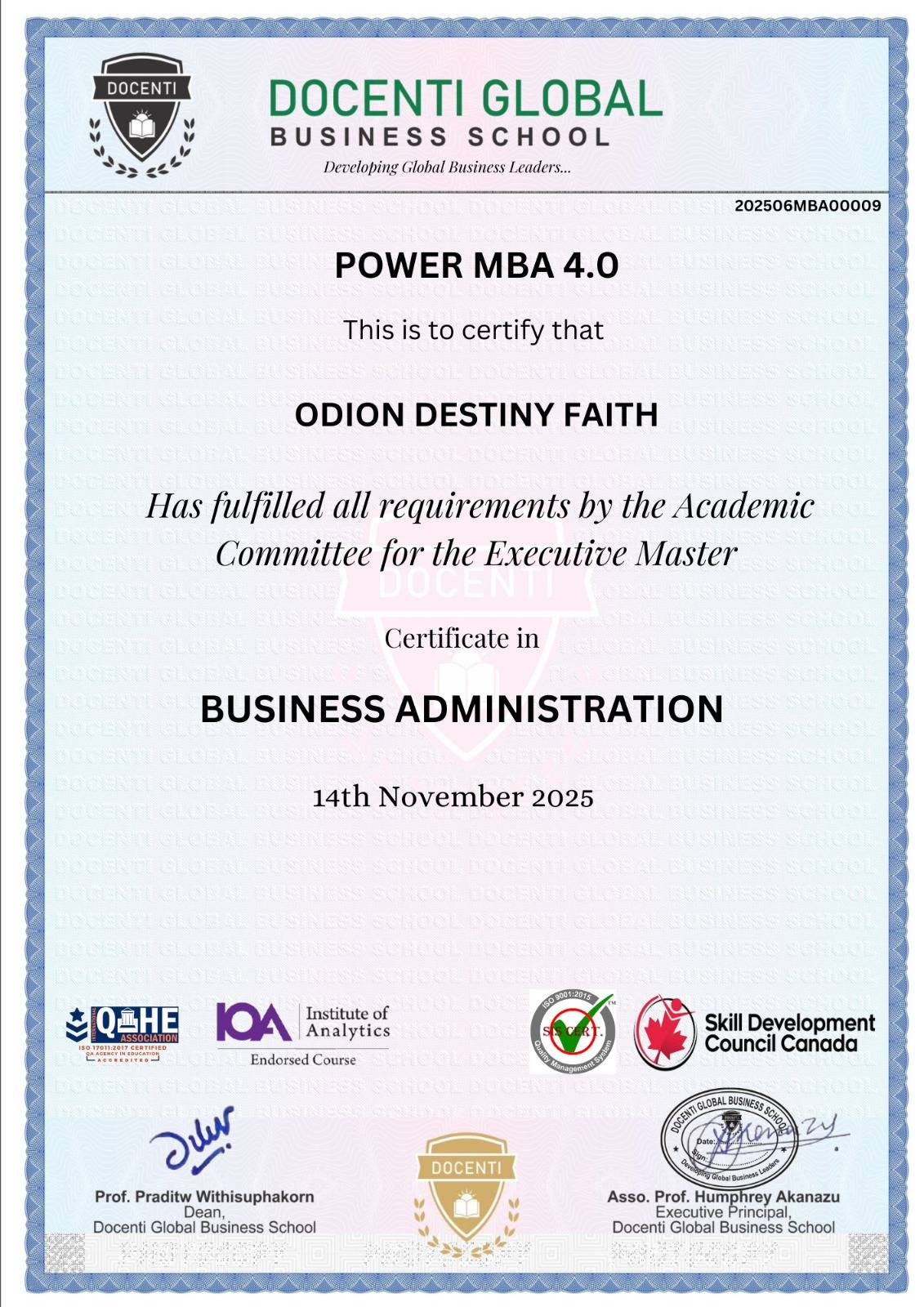
Certificate of Long Life Learning In Business Administration from Docenti Global Business School.
COURSE CONTENT (INTERNATIONAL MANAGEMENT MODULES)
Module 1: Business Integration
Description
The Business Integration Module focuses on equipping learners with the knowledge and skills to effectively integrate various business functions and processes. The module emphasizes a holistic approach to business management, fostering an understanding of how different functional areas such as finance, operations, marketing, and human resources interconnect to achieve organizational objectives. Participants will develop strategic thinking abilities to create synergies across departments, ensuring operational coherence and competitive advantage.
Learning Outcomes:
By the end of this module, you will be able to:
- Demonstrate an understanding of the core concepts of business integration and its relevance to strategic management.
- Analyze the interrelationships between various business functions and their impact on organizational performance.
- Apply integrated business strategies to real-world scenarios, enhancing decision-making and operational efficiency.
- Develop comprehensive business models that align with organizational goals through cross-functional collaboration.
- Evaluate the effectiveness of integrated business practices in optimizing productivity and driving innovation.
Module 2: Strategic Management and Leadership
Description
The Strategic Management and Leadership Module is designed to develop critical thinking and leadership skills necessary for making strategic decisions in dynamic business environments. This module covers fundamental concepts of strategic planning, execution, and evaluation while emphasizing the role of leadership in guiding organizations through change and innovation. Participants will gain practical insights into formulating strategies that align with organizational goals and leading teams effectively to achieve long-term success.
Learning Outcomes:
By the end of the module, students should be able to:
- Understand the core principles of strategic management and leadership and their application in organizational settings.
- Analyze complex business environments to formulate and implement strategic initiatives.
- Develop leadership skills to inspire, motivate, and guide teams toward achieving strategic objectives.
- Evaluate the effectiveness of strategic leadership practices in promoting sustainable business growth.
- Apply strategic thinking to problem-solving, risk management, and change management within various organizational contexts.
Module 3: Research Methodology
Description:
The Research Methodologies Module is designed to provide learners with a comprehensive understanding of the principles and practices of academic and professional research. This module covers various research paradigms, methods, and techniques necessary for conducting systematic investigations. Learners will acquire the skills to design, implement, and analyze research projects, emphasizing data collection, analysis, interpretation, and reporting. The module also highlights the importance of ethical considerations in research.
Learning Outcomes:
By the end of this module, you will be able to:
- Understand the fundamental concepts and frameworks of research methodologies.
- Formulate clear and feasible research questions and hypotheses.
- Critically evaluate various research designs and select appropriate methods for specific research objectives.
- Collect, analyze, and interpret qualitative and quantitative data using appropriate tools and techniques.
- Demonstrate the ability to present research findings effectively while adhering to ethical standards.
- Critique and synthesize academic literature to support evidence-based conclusions.
Module 4: Digital Marketing and Social Media Strategies
Description:
The Digital Marketing and Social Media Strategies Module equips learners with the knowledge and skills to develop, implement, and manage effective digital marketing campaigns. This module covers the latest strategies and tools used in the digital marketing landscape, including social media marketing, content creation, SEO, email marketing, and analytics. Participants will learn to leverage digital platforms to enhance brand visibility, engage audiences, and drive business growth through data-driven strategies.
Learning Outcomes:
Upon successful completion of this module, students will be able to:
- Understand the core concepts and principles of digital marketing and social media strategies.
- Develop comprehensive digital marketing plans tailored to organizational goals and target audiences.
- Utilize social media platforms effectively to build brand awareness and foster customer engagement.
- Apply data analytics to measure the success of digital marketing campaigns and optimize performance.
- Create and manage content strategies that align with digital marketing objectives.
- Integrate SEO, SEM, and social media tactics to maximize online presence and reach.
- Evaluate digital marketing trends and emerging technologies to stay competitive in the digital landscape.
Module 5: International Financial Management
Description
The International Financial Management Module is designed to equip learners with the essential skills and knowledge to manage financial operations in a global context. This module covers the key principles of international finance, including foreign exchange risk management, international investment decisions, and cross-border financial planning. Participants will gain a comprehensive understanding of how global financial markets operate and how multinational corporations manage their financial resources effectively.
Learning Outcomes
Upon successful completion of this module, learners will be able to:
- Understand the fundamental concepts and theories of international financial management.
- Analyze the impact of global financial environments on corporate finance decisions.
- Evaluate the risks and opportunities associated with foreign exchange and currency fluctuations.
- Develop strategies for managing financial risks in multinational business operations.
- Apply techniques for international capital budgeting and financial analysis.
- Assess the financial performance of global business ventures and make informed investment decisions.
- Demonstrate an understanding of international financial regulations and their implications for business practices.
Module 6: International Human Resource Management
Description
The International Human Resource Management (IHRM) Module focuses on developing the skills and knowledge required to manage human resources in a global context. This module covers the strategies and practices essential for managing a diverse and geographically dispersed workforce. Key topics include cross-cultural management, global talent acquisition, international labor laws, and performance management across borders. Participants will learn how to navigate the challenges of aligning HR practices with diverse cultural, legal, and organizational environments.
Learning Outcomes
Upon successful completion of this module, learners will be able to:
- Understand the principles and frameworks of international human resource management.
- Analyze the impact of cultural diversity on HR practices and employee management.
- Develop strategies for global talent acquisition, retention, and development.
- Apply effective cross-cultural communication techniques in diverse workplaces.
- Evaluate international labor laws and compliance requirements in various regions.
- Design performance management systems tailored to multinational organizations.
- Implement HR practices that foster employee engagement and organizational cohesion across borders.
Module 7: International Project Management
Description:
The International Project Management Module equips learners with the essential skills and knowledge to manage complex projects across global settings. This module focuses on the key aspects of project planning, execution, and control within international contexts, emphasizing cross-cultural communication, global team management, risk assessment, and compliance with international standards. Learners will develop the ability to strategically manage projects involving diverse stakeholders and navigate the challenges of coordinating resources across borders.
Learning Outcomes:
Upon successful completion of this module, learners will be able to:
- Understand the fundamental concepts and practices of international project management.
- Develop project plans that account for cross-border challenges and multicultural team dynamics.
- Apply effective communication and leadership strategies to manage global project teams.
- Identify and assess risks associated with international projects and develop mitigation strategies.
- Utilize project management tools and techniques to monitor progress and ensure successful delivery.
- Evaluate the impact of cultural, legal, and economic factors on project outcomes.
- Demonstrate the ability to adhere to international project management standards and best practices.
Module 8: Company Analysis Using AI (Elective)
Description
This module provides a comprehensive framework for analysing companies in today’s rapidly evolving business landscape, where artificial intelligence (AI) is playing an increasingly critical role. Students will master both traditional and AI-driven approaches to company analysis, gaining the skills and knowledge to make data-driven decisions and develop effective strategies.
Learning Outcomes
Upon successful completion of this module, students will be able to:
- Perform comprehensive company analyses integrating both traditional and AI-driven methods.
- Leverage AI tools for financial analysis, market research, customer insights, and operational analysis.
- Use AI to enhance strategic decision-making, risk assessment, and opportunity identification.
- Understand the ethical implications of AI in business and apply responsible AI practices.
- Communicate insights effectively using data visualization and storytelling techniques.
COURSE CONTENT ( ELECTIVE MODULES)
Module 1: Entrepreneurship (Elective)
Description
This module is designed to provide you with the knowledge, skills, and mindset necessary to succeed in the dynamic world of business creation and innovation.
Learning Outcomes:
Upon successful completion of this module, students will be able to:
- Explore the fundamental concepts, theories, and practices of entrepreneurship.
- Learn how to identify and evaluate entrepreneurial opportunities in the marketplace.
- Master the art of crafting compelling business plans that attract investors and guide your venture.
- Gain insights into the operational aspects of launching and managing new businesses, including marketing, finance, and human resources.
- Understand the role of various stakeholders, including investors, mentors, and accelerators, in the entrepreneurial landscape.
- Develop the critical thinking, problem-solving, and resilience skills essential for entrepreneurial success.
Module 2: Managing Creativity (Elective)
Description
In today’s rapidly evolving business landscape, creativity has become an indispensable asset for organizations seeking to thrive and maintain a competitive edge. It is no longer enough to simply optimize existing processes; businesses must constantly innovate, adapt, and generate novel solutions to complex challenges. This is where the ability to manage creativity comes into play.
An MBA program focused on managing creativity would equip future leaders with the knowledge and skills to foster and harness the creative potential within their
Learning Outcomes:
Upon successful completion of this module, students will be able to:
Define creativity and innovation, distinguishing them from related concepts like invention and improvement. They will understand the different perspectives on creativity and its role in organizational success.
Master a variety of ideation techniques and brainstorming methods to generate novel and valuable ideas. They will be able to apply these techniques in individual and group settings.
Learn how to foster a culture that values and encourages creativity at all levels of an organization. They will be able to identify and implement strategies to promote openness, risk-taking, and collaboration.
Gain a deeper understanding of their own creative strengths and areas for development. They will be able to leverage their unique talents to contribute to innovative endeavours.
Module 3: Marketing (Elective)
Description
This module is designed to provide you with a comprehensive understanding of marketing principles and their application in today’s dynamic business environment. Whether you’re a seasoned professional or new to the field, this course will equip you with the knowledge and skills to develop and execute effective marketing strategies.
Learning Outcomes:
By the end of this module, you will be able to:
- Analyse the marketing environment and identify opportunities and threats.
- Develop and implement effective marketing strategies.
- Make informed marketing decisions based on data and analysis.
- Build strong brands and create customer loyalty.
- Utilize digital marketing tools to reach and engage target audiences.
- Measure and evaluate the effectiveness of marketing campaigns.
Module 4: Economics for Managers (Elective)
Description:
This module is designed to provide MBA students with a robust understanding of economic principles and their application in managerial decision-making. It bridges the gap between economic theory and real-world business challenges, equipping future managers with the tools to analyse markets, understand consumer behaviour, and make optimal choices in various economic environments.
Learning Outcomes
By the end of this module, you will be able to:
- Apply microeconomic principles to analyse market dynamics and make informed business decisions.
- Understand the macroeconomic environment and its influence on business performance.
- Utilize economic tools and frameworks to evaluate strategic options and manage risk.
- Analyse the impact of government policies on business and the economy.
- Communicate economic concepts effectively in a business context.



Accreditations and Memberships







Frequently Asked Questions
What is the Power MBA 4.0?
Power MBA 4.0 is an accelerated MBA programme designed for professionals, entrepreneurs, and business leaders who want practical business knowledge, leadership skills, and real-world insights within a flexible learning format.
How is the Power MBA 4.0 different from a traditional MBA?
Unlike traditional MBA program, Power MBA 4.0 focuses on practical business application, executive roundtable discussions, real-life business experiences, and accelerated learning.
How long does it take to complete the Power MBA 4.0?
The program is designed to be completed within one year, making it suitable for busy professionals seeking rapid career advancement.
Is the Power MBA 4.0 suitable for working professionals?
Yes. The program is structured to accommodate professionals, business owners, executives, and entrepreneurs who want to study while maintaining their careers.
What will I learn in the Power MBA 4.0?
Students develop skills in business strategy, leadership, innovation, entrepreneurship, management, story telling, decision-making, and organizational growth through practical business cases and executive insights.
Who should enroll in the Power MBA 4.0?
The program is ideal for entrepreneurs, managers, executives, business owners, startup founders, and professionals seeking leadership and business transformation skills.
Does the Power MBA 4.0 include real-world business learning?
Yes. The program features executive storytelling sessions, roundtable discussions, and practical business experiences shared by accomplished business leaders and entrepreneurs.
Are scholarships available for the Power MBA 4.0?
Yes. The program offers scholarship opportunities for eligible applicants, helping make quality business education more accessible.
What career benefits can I expect from the Power MBA 4.0?
Graduates gain strategic leadership skills, stronger business acumen, expanded professional networks, and enhanced opportunities for career progression and entrepreneurship.
Why choose the Power MBA 4.0?
Power MBA 4.0 combines practical learning, executive mentorship, flexible study, affordable tuition, and globally relevant business education designed for today’s professionals.