Why Professionals Are Returning to School to Stay Competitive in 2026
The traditional career path was relatively straightforward: earn a degree, enter the workforce, gain experience and gradually move up.
That model is becoming less predictable.
In 2026, professional experience still matters—but experience alone may not be enough when the skills required to perform a job are changing faster than many career paths can accommodate.
Artificial intelligence, automation, digital transformation, new business models and increasingly specialized roles are changing what employers expect from professionals. The result is a growing emphasis on continuous learning, reskilling and the ability to apply new knowledge to existing experience.
The World Economic Forum estimates that 39% of workers’ existing skill sets could be transformed or become outdated between 2025 and 2030. It also estimates that 59 out of every 100 workers will need reskilling or upskilling by 2030.
LinkedIn has similarly estimated that 70% of the skills used in most jobs could change by 2030, with AI acting as a major catalyst.
This helps explain why returning to school is increasingly becoming less about “going back to university” and more about deliberately upgrading one’s professional capabilities.

The meaning of going back to school has changed
For previous generations, returning to school might have meant leaving employment, relocating and spending several years pursuing another qualification.
That is no longer the only model.
Working professionals can now pursue postgraduate education while maintaining their careers through online, blended, part-time and flexible learning models.
The motivation has also changed.
Professionals are not necessarily returning to education because their previous qualification has become worthless. In many cases, they are building on it.
A marketing professional may pursue an MBA to strengthen strategic and financial decision-making.
A manager may study data and artificial intelligence to understand technologies increasingly influencing their organization.
An operations professional may deepen their expertise in supply chain management.
A senior executive may pursue a Doctor of Business Administration to develop stronger research and evidence-based decision-making capabilities.
The qualification becomes another layer of capability rather than a replacement for professional experience.
1. Skills are changing faster than job titles
One of the biggest reasons professionals are returning to education is the changing relationship between jobs and skills.
A job title can remain the same while the capabilities required to perform that job change substantially.
Consider a marketing manager.
The title may be familiar, but the role can now involve:
- marketing analytics
- customer data
- automation
- AI-assisted content creation
- digital advertising
- CRM systems
- attribution
- strategic planning
- customer experience
- data interpretation
The same principle applies across finance, human resources, operations, supply chain, consulting and management.
The World Economic Forum identifies AI and big data, networks and cybersecurity, and technological literacy among the fastest-growing skill areas through 2030. At the same time, analytical thinking, resilience, leadership, creativity and adaptability remain highly important.
That combination is important.
The future professional is unlikely to be defined solely by technical knowledge.
The competitive advantage increasingly comes from combining technical understanding with business judgment and human capabilities.
2. AI is changing what employers expect from experienced professionals
AI has introduced another reason for professionals to reconsider their education.
The question is no longer simply:
“Will AI replace my job?”
A more useful question is:
“How will AI change what a competent person in my profession is expected to do?”
This distinction matters.
AI can automate or accelerate particular tasks, but organisations still require people who can interpret information, make decisions, manage risk, communicate effectively and understand the broader business consequences of those decisions.
The World Economic Forum expects technological skills to grow rapidly while human capabilities such as analytical thinking, leadership, resilience, flexibility and creative thinking remain important.
LinkedIn’s research also points toward a rapidly changing skills environment, with professionals increasingly adding new skills to their profiles as work evolves.
This creates an interesting challenge for experienced professionals.
They may already understand their industry extremely well.
What they may need is a structured way to connect that experience with new technologies, new management practices and new forms of business analysis.
That is where postgraduate education can become particularly valuable.
3. Professional experience and formal education solve different problems
There is sometimes an unnecessary debate about whether experience or education matters more.
For many professionals, the better answer is: both do different things.
Experience provides context.
Education provides frameworks.
Experience teaches a professional how things actually happen inside an organization.
Education can help them understand why they happen, compare alternative approaches and develop structured methods for solving problems.
Consider a senior operations professional.
Years of experience may provide an excellent understanding of procurement, suppliers, logistics and operational bottlenecks.
A postgraduate programme can add structured knowledge around:
- operations strategy
- supply chain optimisation
- organisational leadership
- financial decision-making
- analytics
- risk management
- sustainability
- strategic transformation
The combination can be more powerful than either one alone.
This is particularly relevant to postgraduate business education because mature professionals can bring real organisational problems into the classroom.
The learning is no longer purely theoretical.
It can become an opportunity to examine real decisions through academic and strategic frameworks.
4. Employers increasingly need people who can connect disciplines
Another reason professionals are returning to school is the growing importance of interdisciplinary knowledge.
Business problems rarely stay inside one department.
A digital transformation project, for example, can involve:
Technology + Finance + Operations + Human Resources + Marketing + Strategy
Similarly, implementing AI in an organisation is not simply an IT project.
It can involve:
- data governance
- employee adoption
- leadership
- cybersecurity
- customer experience
- regulatory considerations
- financial investment
- organisational change
This is one reason management education continues to evolve.
The valuable professional is increasingly the person who can understand their own function and communicate intelligently with other functions.
An MBA, Master’s programme or executive education programme can provide a structured environment for developing that broader perspective.
5. Returning to school can be a career strategy—not a career reset
One of the biggest misconceptions about postgraduate education is that going back to school means starting over.
For an experienced professional, it can mean the opposite.
It can be a way of repositioning existing experience.
| Existing experience | Possible new direction |
| ——————- | ————————-|
| Marketing | Digital marketing / strategy
| HR | Strategic HR / organisational leadership
| Operations | Supply chain / operations strategy
| Finance | Strategic management / business analytics
| IT | Digital transformation / business leadership
| Entrepreneurship | Strategic management / innovation
| Senior management | Executive leadership / DBA
The qualification does not erase the professional’s previous experience.
It can help connect that experience to a new area of responsibility.
That distinction is especially important for professionals considering an MBA or Master’s degree.
The objective should not simply be “get another certificate.”
It should be:
What capability will this qualification allow me to demonstrate that I cannot demonstrate as strongly today?
6. Why an MBA is becoming relevant to more professionals
An MBA is traditionally associated with people pursuing management or executive careers.
But the modern business environment has blurred the boundaries between technical and managerial roles.
A professional does not necessarily need to become a CEO to benefit from business education.
A technical specialist may eventually manage a team.
A marketing specialist may manage a budget.
An engineer may lead a commercial project.
An HR professional may participate in organisational strategy.
An operations manager may become responsible for international supply chains.
As responsibilities expand, professionals often need to understand areas outside their original specialisation.
That is one of the central purposes of an MBA: developing a broader understanding of how organisations create value, allocate resources and make strategic decisions.
For professionals evaluating an MBA in 2026, the more important question may therefore be:
“What business problems do I want to become better equipped to solve?”
rather than simply:
“Which MBA is the most prestigious?”
7. A Master’s degree can provide deeper specialisation
Not every professional needs broader management education.
Some need deeper expertise.
This is where a Master’s degree can be particularly relevant.
A professional working in an increasingly technical field may want to develop specialised knowledge rather than move immediately into general management.
Fields such as:
- data science
- artificial intelligence
- cybersecurity
- digital transformation
- sustainability
- business analytics
are examples of areas where specialised knowledge can complement existing professional experience.
The World Economic Forum identifies AI, big data, networks and cybersecurity and technological literacy among the fastest-growing skill areas.
For professionals, this creates an important distinction:
An MBA can broaden your business perspective.
A specialised Master’s can deepen your expertise.
Neither is universally better.
The appropriate choice depends on the professional problem you are trying to solve.
8. Senior professionals may need a different kind of education
At senior levels, the learning objective changes again.
A junior professional may primarily want to acquire knowledge.
A senior executive may want to generate knowledge, challenge established assumptions and solve complex organizational problems.
This is one reason professional doctorates such as the Doctor of Business Administration (DBA) exist.
A DBA is designed around advanced business research and the application of research to organizational problems.
Docenti Global Business School, EU Global DBA is positioned as a research-based professional doctorate for senior executives, consultants and policymakers, with an emphasis on bridging business practice and academic theory.
That represents another stage in the education-career relationship:
Degree → Professional competence → Management responsibility → Advanced research and leadership
Education does not necessarily end when someone becomes experienced.
Sometimes, greater responsibility creates a stronger reason to continue learning.
9. Flexibility is changing who can return to school
One of the biggest barriers for working professionals has historically been time.
A professional with a full-time job, family responsibilities and existing commitments cannot necessarily attend a traditional full-time programme.
Flexible learning models have therefore become increasingly important.
Online and blended education can allow professionals to structure learning around their existing responsibilities.
This does not automatically make every online programme good.
The quality of the curriculum, faculty, assessment, academic support, supervision and institutional standards still matter.
But flexibility changes the equation.
It makes postgraduate education more accessible to professionals who might previously have considered returning to school impractical.
Docenti Global Business School, offers postgraduate and doctoral programmes with flexible learning options, including online delivery. Its programme portfolio includes MBA and Master’s programmes as well as doctoral education.
10. The strongest professionals may become lifelong learners
Perhaps the biggest change is psychological.
The idea that education ends when someone receives their first degree is becoming increasingly difficult to sustain.
The World Economic Forum specifically identifies curiosity and lifelong learning among the capabilities expected to increase in importance through 2030.
That does not mean everyone needs another degree every few years.
It means professionals need to become more intentional about maintaining the relevance of their capabilities.
Sometimes that means a short professional course.
Sometimes it means certification.
Sometimes it means learning directly from industry.
And sometimes a Master’s, MBA or doctoral programme makes sense because the professional needs a deeper and more structured level of learning.
The important point is that career development is increasingly becoming an ongoing process rather than a one-time educational decision.
So, should professionals return to school in 2026?
Not necessarily.
Going back to school simply because “everyone is doing it” is not a good strategy.
A postgraduate qualification should solve a professional problem.
Before enrolling, professionals should ask:
1. What is changing in my industry?
Look beyond your current job description.
What technologies, regulations, business models or customer expectations are changing the industry?
2. Which skills will matter more in three to five years?
Do not choose a programme solely because a skill is fashionable today.
Look for skills that connect to the direction of your industry.
3. Do I need breadth or depth?
If your challenge is understanding business more broadly, an MBA may make sense.
If your challenge is developing specialised expertise, a Master’s may be more appropriate.
If your goal involves advanced research and strategic organisational impact, a professional doctorate may be worth considering.
4. Can I apply the learning immediately?
This is particularly important for working professionals.
The strongest programmes should give learners opportunities to connect theory with practical organisational problems.
5. What does the qualification actually represent?
Professionals should investigate:
- awarding institution
- accreditation or regulatory status
- qualification level
- curriculum
- faculty
- assessment
- delivery format
- academic support
- progression opportunities
- employer relevance
- international recognition where applicable
A qualification should be evaluated beyond its marketing.
The real competitive advantage is not another certificate
This may be the most important point.
The future of professional competitiveness is unlikely to be determined simply by who has the longest list of qualifications.
It will increasingly depend on what a professional can do with what they know.
A person with an MBA who cannot make better decisions has gained a credential but not necessarily a competitive advantage.
A person with a Master’s degree who cannot apply the knowledge to real problems faces the same issue.
A professional who combines experience + specialised knowledge + business understanding + technological literacy + critical thinking + adaptability is building something more valuable.
That is why returning to school in 2026 should not be viewed simply as “getting another degree.”
It is better understood as reinvesting in professional capability.
What this means for working professionals
The modern career is becoming less linear.
Professionals may move between industries, functions, leadership positions and entrepreneurial opportunities several times throughout their careers. LinkedIn’s research indicates that people entering the workforce today are on pace to hold roughly twice as many jobs over their careers as people did 15 years ago.
That means adaptability is becoming a career asset.
The question is no longer simply:
“What did I study?”
It is increasingly:
“What can I learn, apply and lead next?”
For some professionals, the answer will be a new role.
For others, it will be a professional certification.
For others, it may be an MBA, Master’s or doctoral programme.
The right choice depends on the gap between where the professional is today and where they need to be tomorrow.
How Docenti Global Business School fits into this changing landscape
For professionals considering postgraduate education, Docenti Global Business School provides programmes across several stages of professional development, including MBA, Master’s, DBA, PhD and professional/employability-focused education.
Its current programme portfolio includes areas such as Operations and Supply Chain Management, Environment, Energy and Sustainability Management, Data Science and AI, alongside doctoral programmes.
That range is relevant to the broader issue discussed in this article: professionals do not all need the same kind of education.
Someone seeking broader strategic capability may look toward an MBA.
Someone seeking specialised technical capability may consider a Master’s.
An experienced executive seeking advanced research and evidence-based management capability may consider a DBA.
The decision should begin with the career objective, not the qualification title.
Staying Competitive Means Staying Capable
The professional advantage in 2026 is not simply having more credentials than everyone else.
It is having the ability to remain useful as the environment changes.
Technology will continue to evolve.
Job descriptions will change.
Some roles will disappear while new ones emerge.
Organisations will continue to demand people who can combine technology with judgment, data with strategy and expertise with leadership.
Education cannot guarantee career security.
But deliberate learning can increase a professional’s capacity to adapt.
And in a labour market where the World Economic Forum estimates that 59% of workers will need reskilling or upskilling by 2030, choosing what to learn next is becoming a strategic career decision.
The question for professionals in 2026 is therefore not simply:
“Should I go back to school?”
It is:
“What do I need to know next to remain valuable in the work I want to do?”
That is a much better question.
And, increasingly, it is the question behind the decision to return to school.
Explore Our Programs
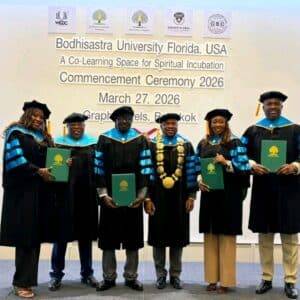
The DBA Program at Docenti Global Business School is designed for professionals and executives looking to strengthen their leadership, research, and strategic business skills for higher-level career and management opportunities.

The Employability Skills Development Program at Docenti Global Business School helps students and professionals develop practical workplace skills, communication abilities, leadership qualities, and career readiness for today’s job market.
Read more